

|
Energy Transfer (Double differential cross-sections) |

|
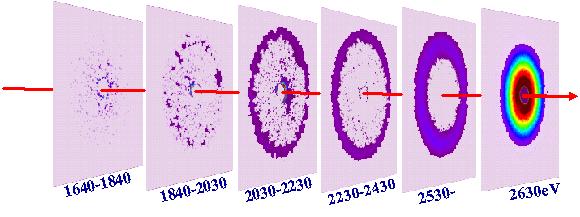
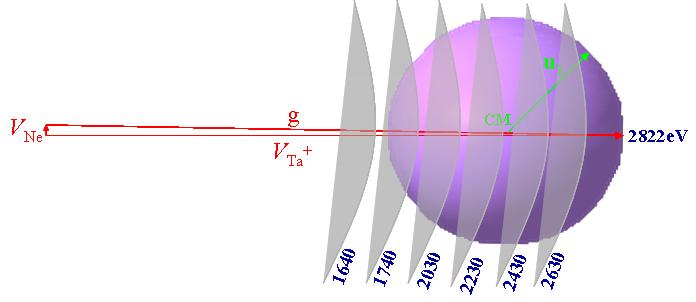
We have the ability to measure double differential cross sections (energy transfer). This is achieved by placing a grid in front of the MCP’s , where an electric potential can be applied in order to select scattered ions with kinetic energies above the retarding potential. In this way we measure the intensity inside the scattering sphere (Tomography of Newton Sphere). |
|
Elastic Scattering |
|
Inelastic Scattering |
|
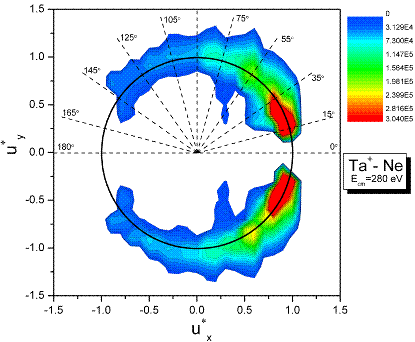
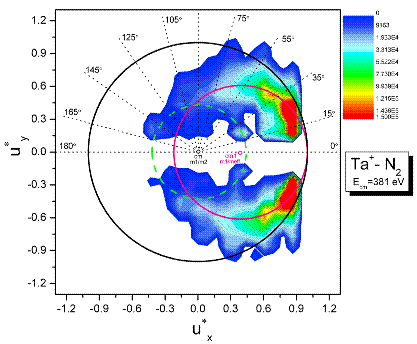
Contour maps of the scattered intensity in the center of mass reference frame for then Ta+ + Ne and N2 scattering. It is evident the strong energy transfer observed which can be explained using impulsive hard shell models. |

|
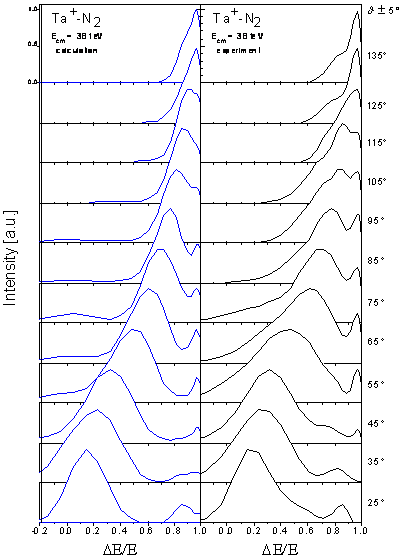
Measured and simulated energy transfer for Ta+ + N2 scattering. |
|
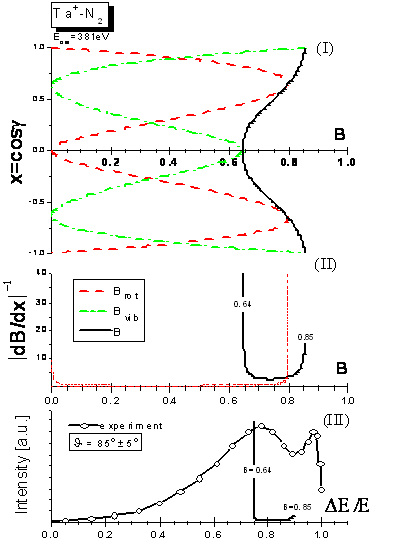
The inelasticity function with the different internal energy (vibration and rotation) contributions |
|
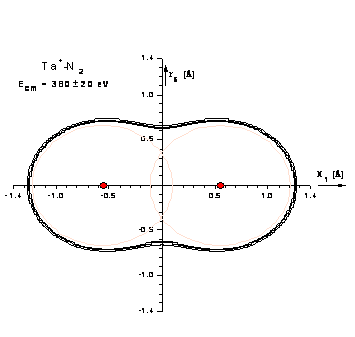
The fitted molecular (N2) contour (hard shell) as it results from the classical physics (hard potential model) calculations. |
|
References: M. Massaouti, Michalis Velegrakis, in preparation |
|
Double differential cross-section = Energy transfer Tomography of the Newton sphere
|




|
Double Differential cross section
|